Grab a coffee, you're in for a long, light, and surprisingly (hopefully) engaging read.
Intro
The part I warn you about stuff
Before we begin, I should warn you: this is probably the longest (and maybe the most thought-out) post I've ever written here. If you came for memes or tech rants... well, buckle up anyway.
We live in a time where everyone has an opinion about everything, and most of the time, we barely know what we're talking about. So I try to keep my public thoughts meaningful, honest, and, ideally, avoid sounding like a podcast host who read two books and now thinks he's Socrates.
This post, though? It shyly reaches into deeper territory. Socially, maybe even politically. But it's not a manifesto. It's just my lived experience. Subjective. Flawed. And absolutely not meant to be consumed dogmatically or without a healthy dose of skepticism.
And to nudge you even more into what to expect, what better way to close this first part with a toast:
A toast to the quiet revolutions, the ones that begin with listening.
Part One
Setting Up The Stage
Our story begins many moons ago when a friend forwarded me an email titled "Εκπαίδευση στη γλωσσική εμψύχωση" (a.k.a. Language Animation Training, whatever that means).
My brain goes:
"Language animation? Sounds like a TEDx talk I'd pretend to watch."
"My life is about coding, why would I care about this?"
"Hard pass."
And just to give you some context: I grew up in the glorious Greek education system of the 2000s (not much better today — hopefully not worse). Born in 1992, school from 1998 to 2010. A system where your entire existence boiled down to one thing: the Πανελλαδικές. A.k.a. the Hunger Games of academia. You don't learn — you survive.
So when something sounds soft, vague, and emotional, like "language animation", my inner STEM-boy goes: "Nope. Pass. Next please."
But for some reason, sunstroke?, boredom?, I kept reading.
Turns out, it wasn't really about "language animation" at all. It was training for team leaders in intercultural youth projects.
"Wait, I've worked with teams before. I can do this. It's not feelings camp, it's team-building".
"Worst case? I eat croissants alone and come back with a tan".
One quick application later, submitted with zero expectations and mild skepticism, I was in.

Part Two
Let the journey begin!
July 2025. El. Venizelos Airport. A bunch of semi-strangers with backpacks, iced coffee (we call it freddo, deal with it), and hopeful small talk, meet. We clicked, laughed. Shared travel anxieties. Bonded like Greeks do: loudly and over snacks.
"Bonding with the Greeks: Check."
"If nothing else, at least I'd have some familiar faces if things got weird", I remember thinking.
We eventually managed to arrive in Orly with only one hour delay. There was a strike by French air traffic controllers that day, which made us edgy. You see we had a TGV to catch. Thankfully though, everything went smoothly. We arrived early, with a few hours to spare before the train, which meant: sightseeing!



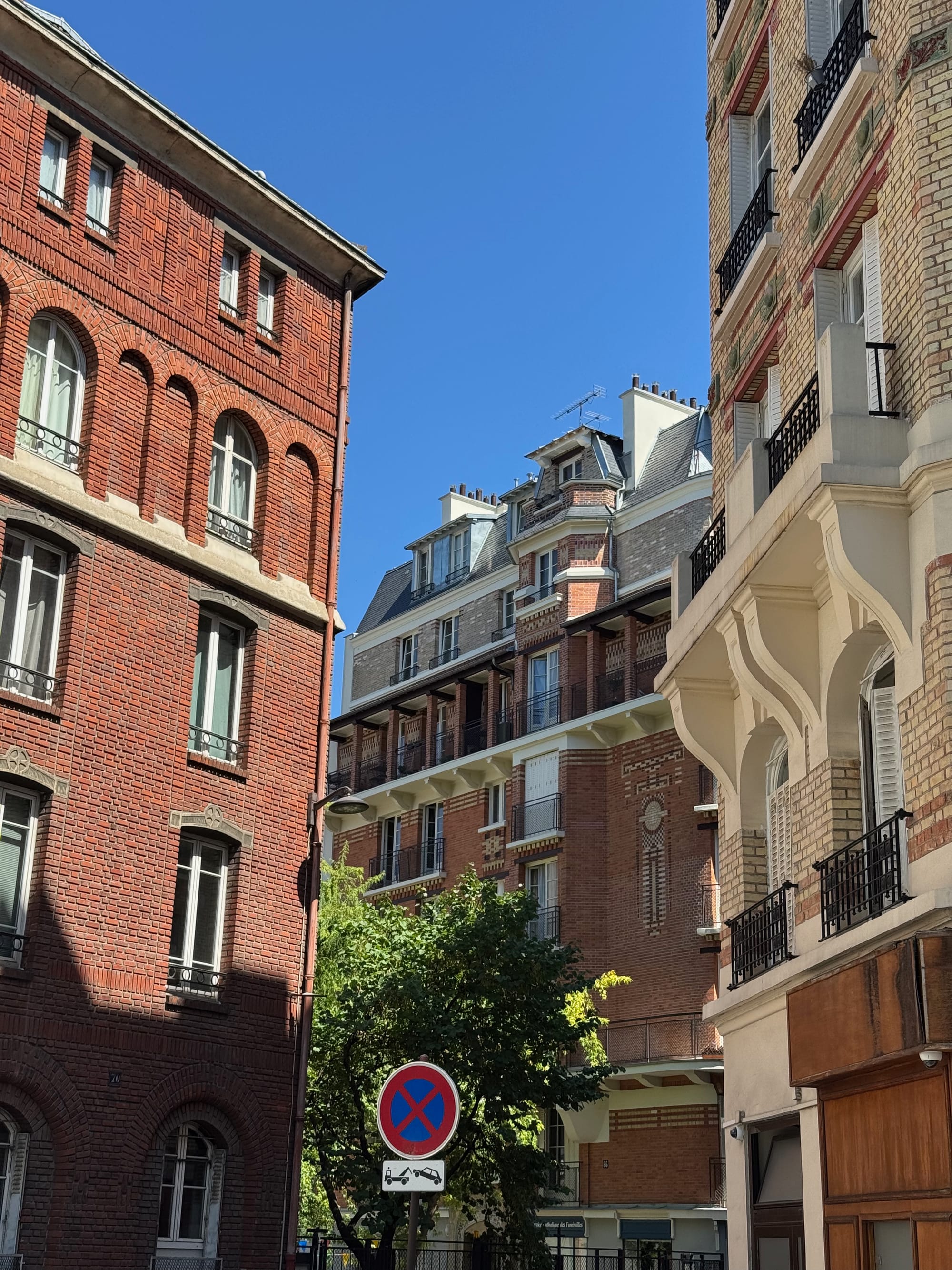
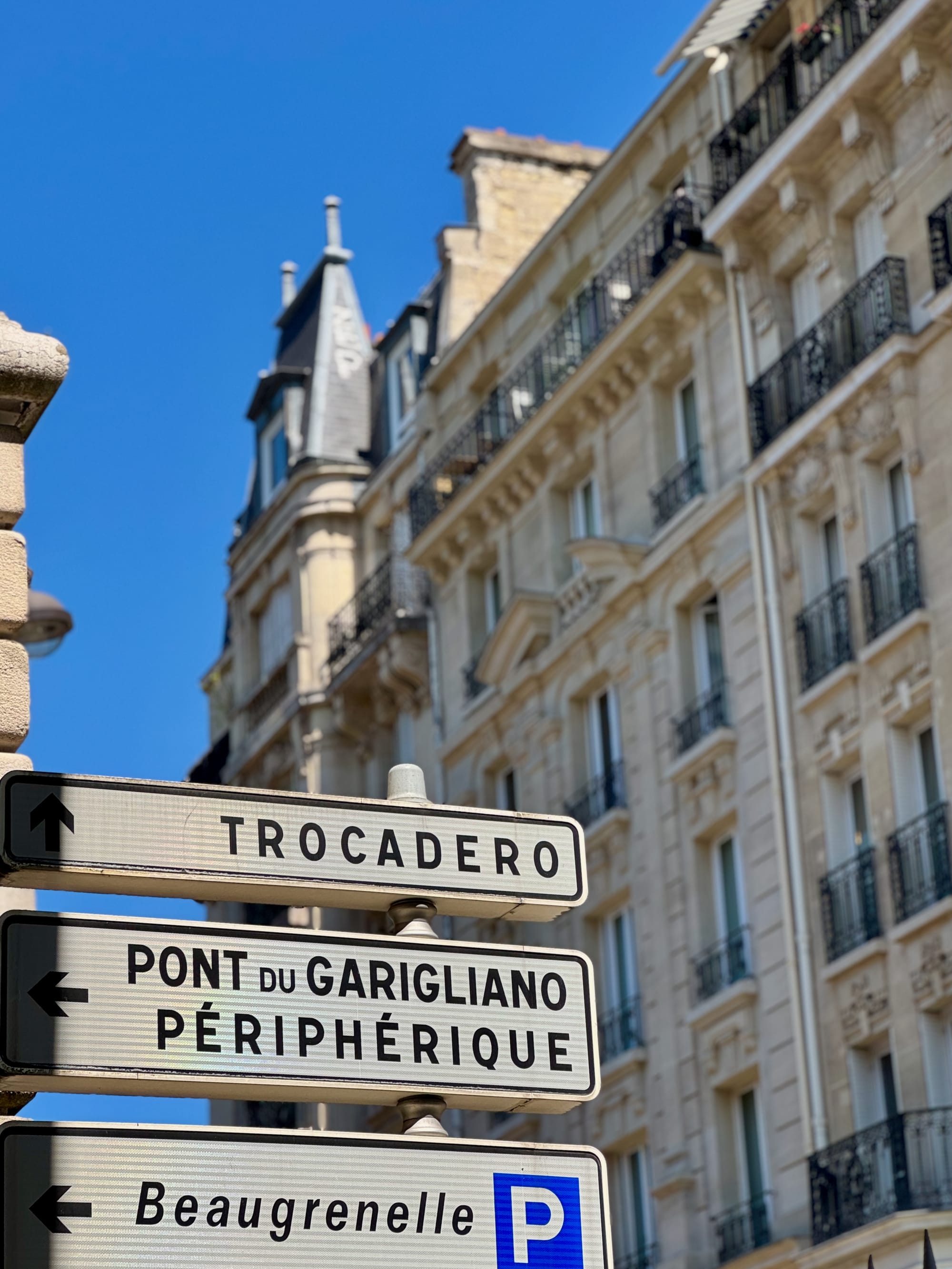


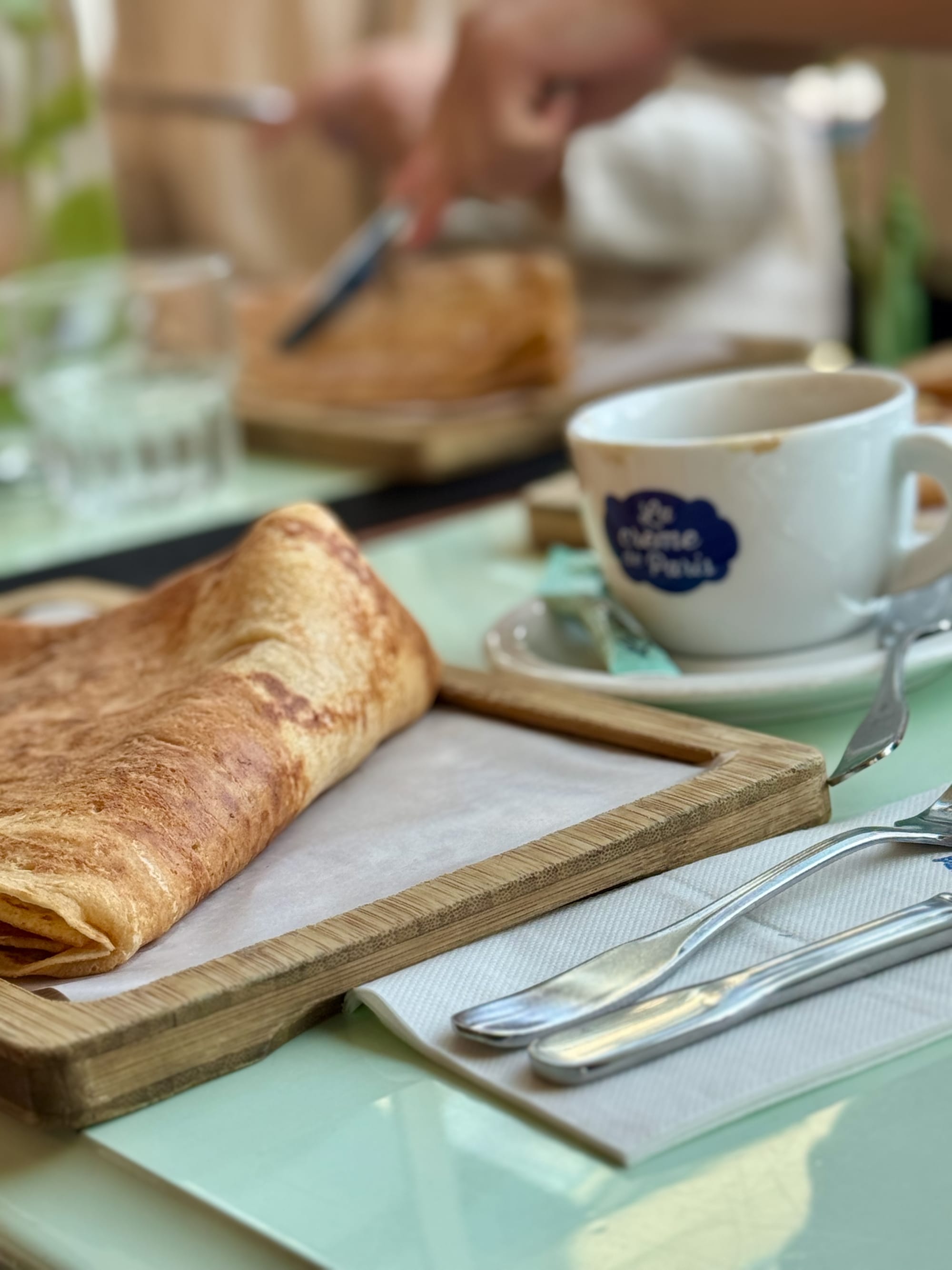
Then we headed to Gare Montparnasse to catch the train and after some classic travel drama (a story for another time maybe), we got on board. That's where we met the rest of the Greeks, the ones flying in from Thessaloniki and a few French participants.
The bar was raised again. "I had made it this far. But now came the real challenge: warming up my social skills for the unknown."
A few hours later, we arrived in Douarnenez, the small coastal town that would host us. And what a town it was. Picturesque, welcoming, quietly magical. But to keep this story focused, I won't dive into poetic travel blogging here.
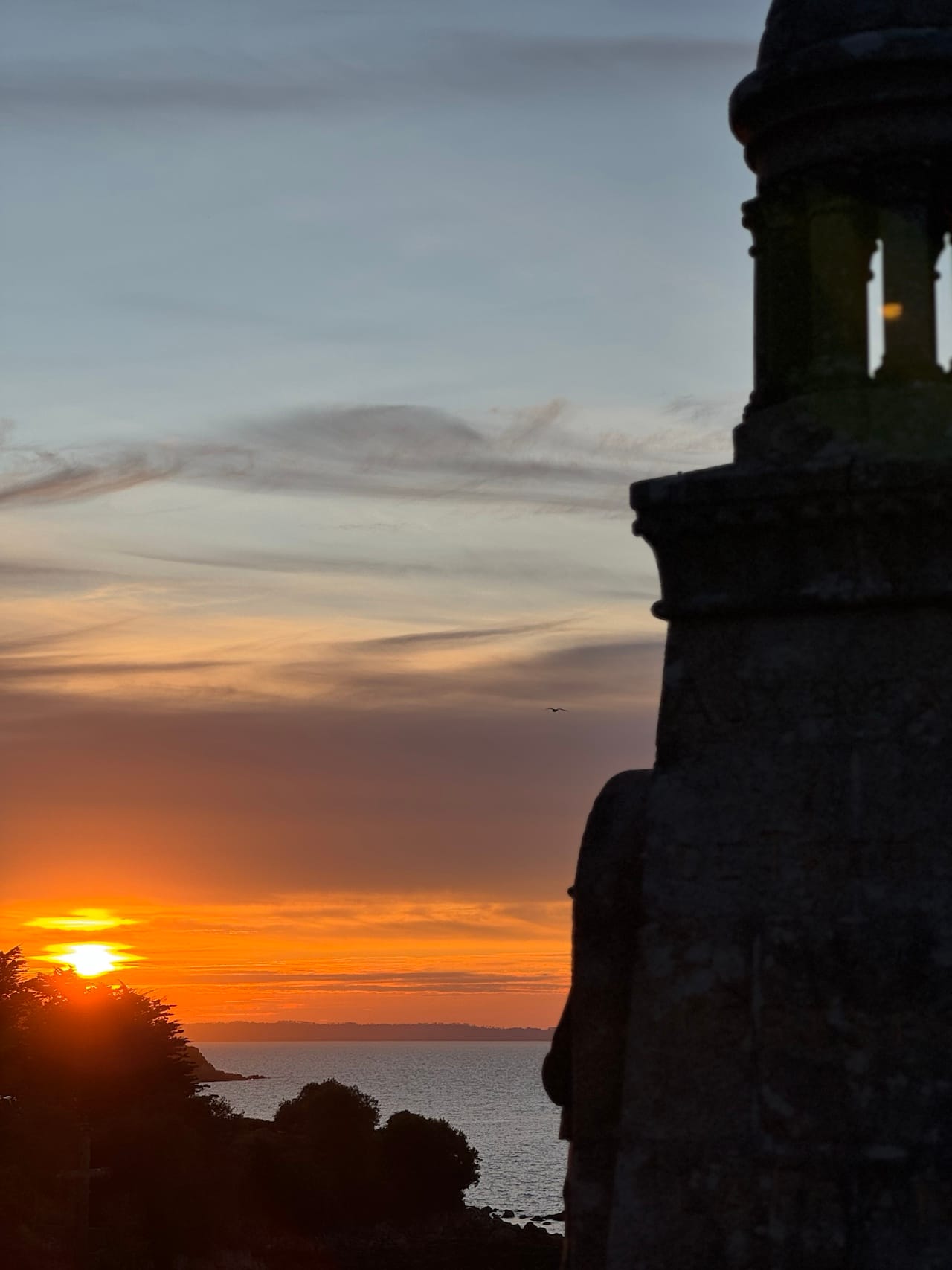
Besides, they say a picture's worth a thousand words, so here's 9000 words in pictures…
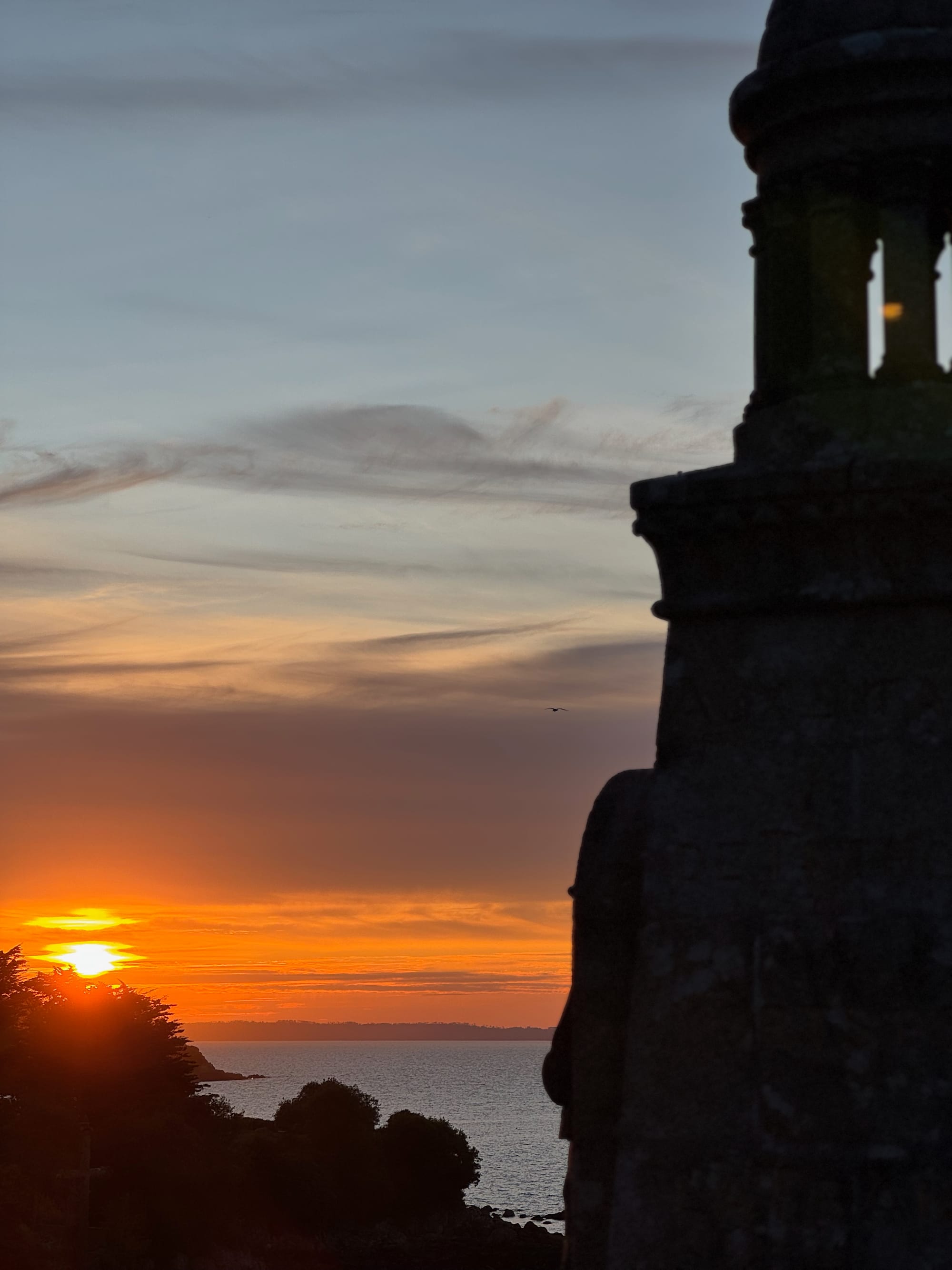
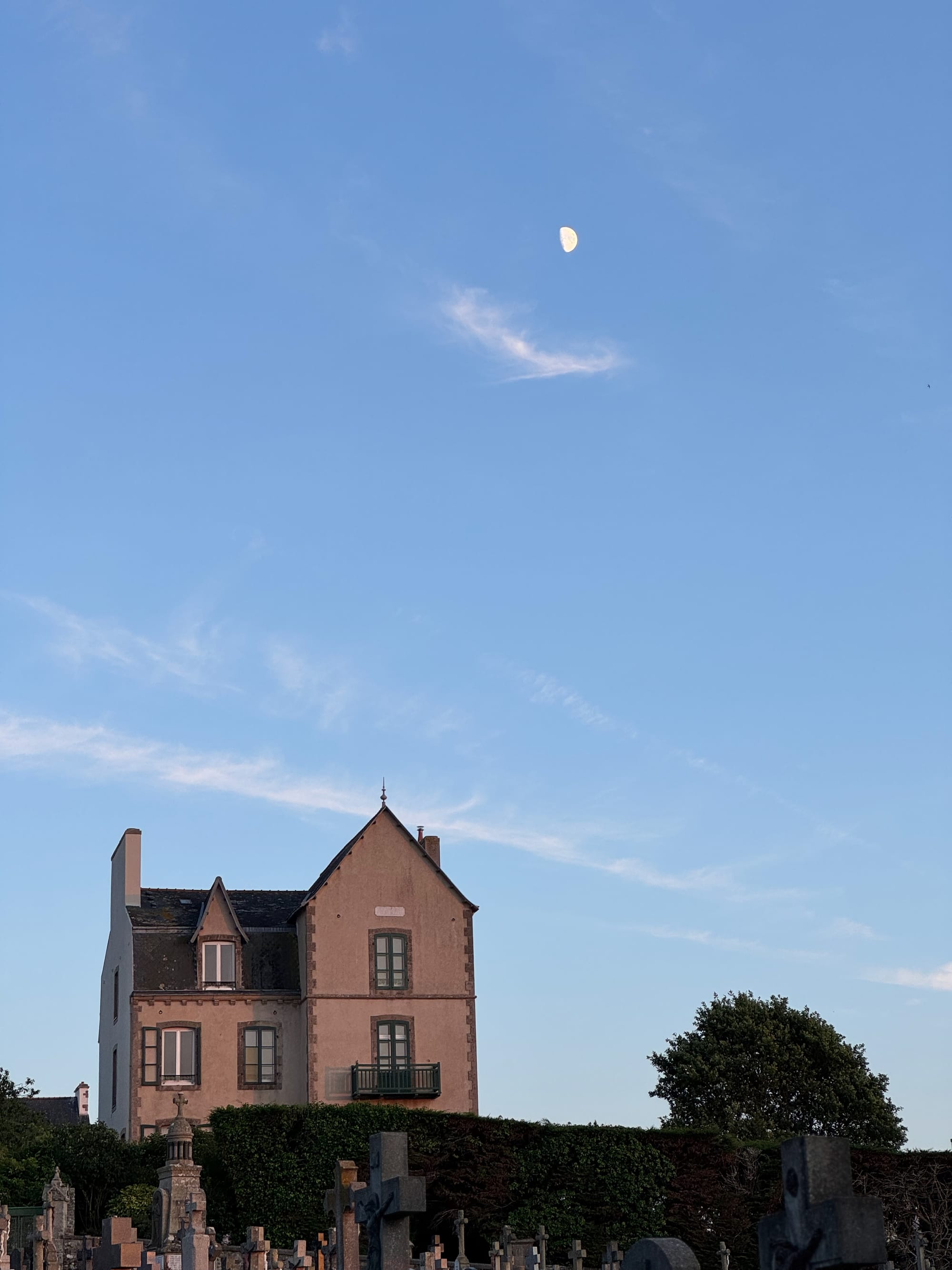
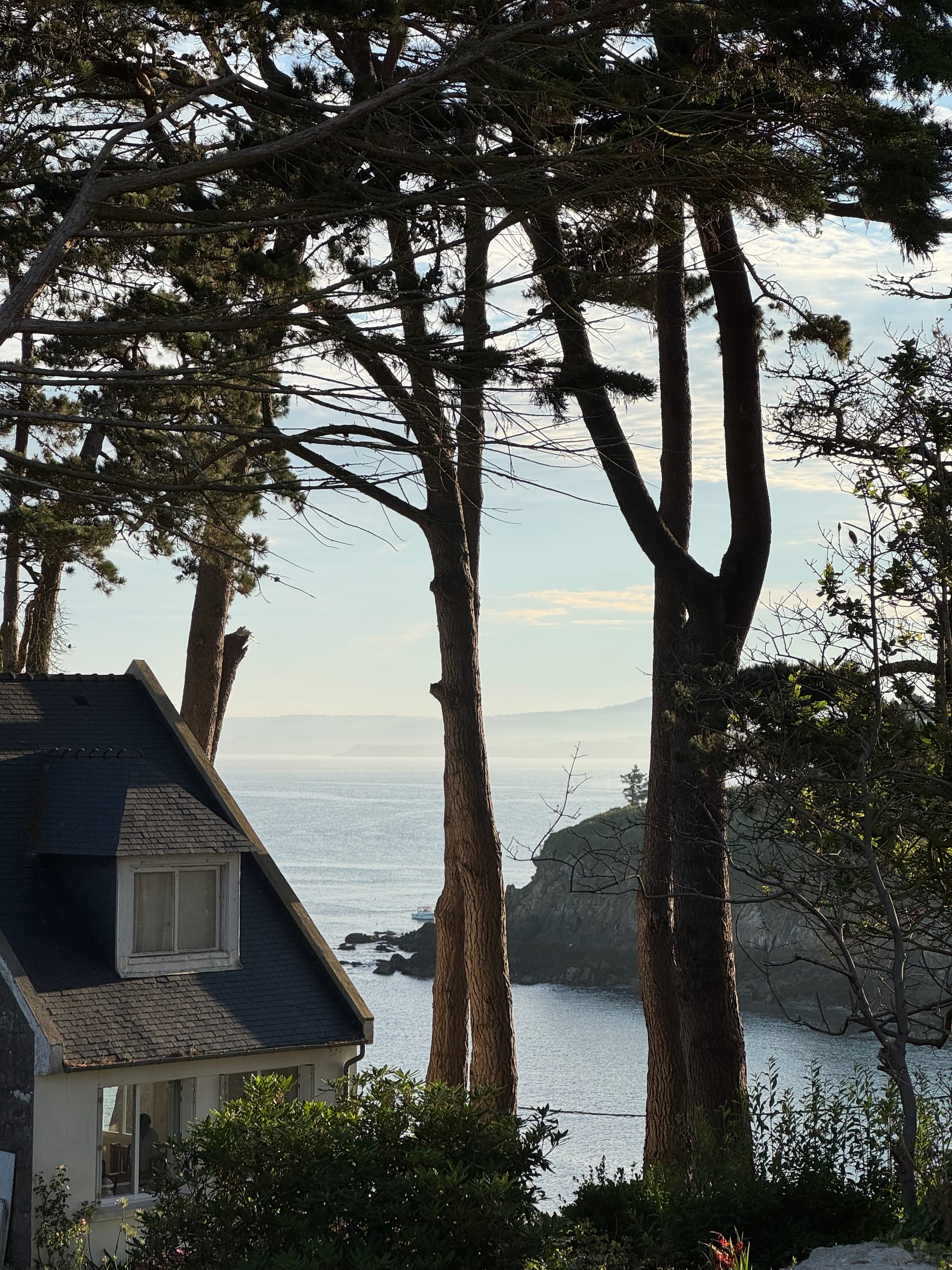


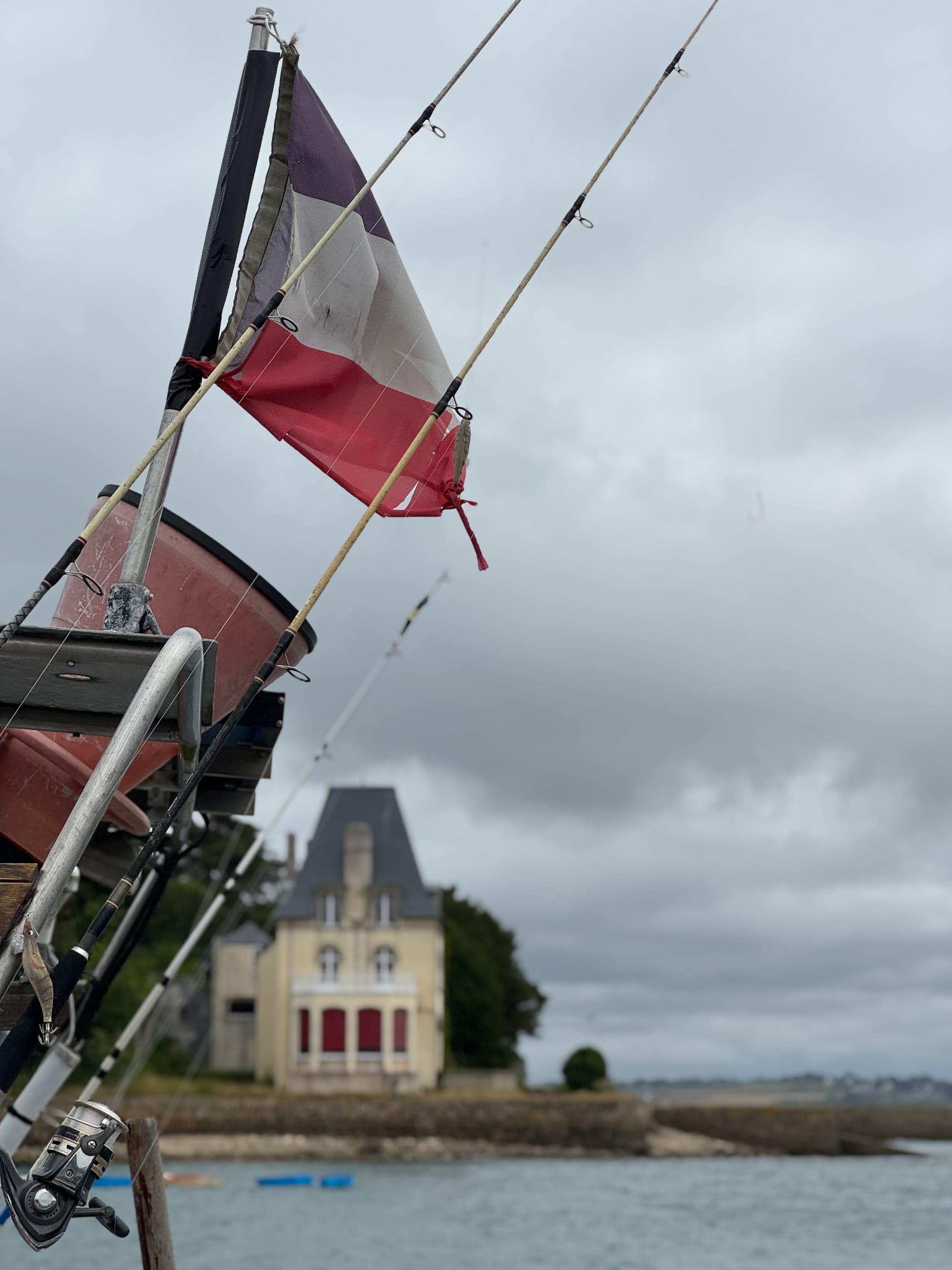


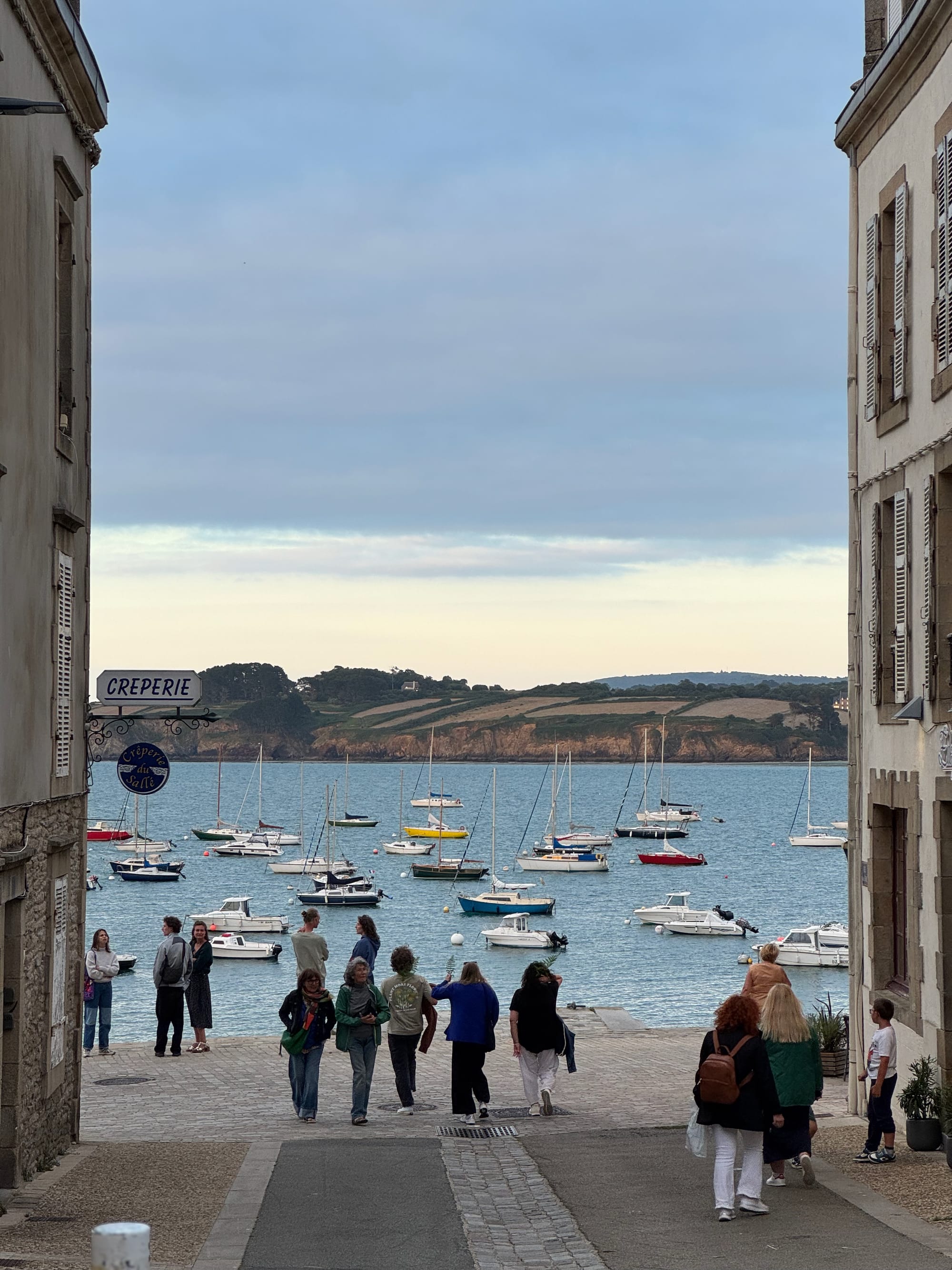
By the time we reached our destination, it was the end of Friday, July 4th. The Americans were celebrating their independence. We, on the other side of the Atlantic, were celebrating something far more important: finally arriving in Douarnenez, and finally sleeping.
Personally, I hadn't slept in nearly 40 hours. The only thing on my mind was bed. After a quick intro by the organizers we were assigned to our rooms.

Part Three
Bonjour, Καλημέρα, Guten Morgen
At breakfast, everyone (mostly) sat divided by country. The Greeks, the Germans, and the French each clumped together, politely nodding at one another. There were some smiles, some glances, a few brave greetings, but the national lines were clear.
The day was focused on introductions: who the organizers were, what the program was about, what we could expect. Useful stuff, for sure, but out of the scope of this post.
What is in the scope though, was one of the games we played that day was a great icebreaker: sit across from another participant and interview them. By pure chance, I ended up opposite a French participant. Early twenties, nervous smile (or at least that's what I thought), semi-relaxed posture. And my first thought was: "What the fuck am I supposed to ask a 20-year-old from France?"
My analytical brain kicked in like a Windows Update no one asked for, charting conversation flows, building topic trees, overthinking everything. And then it hit me: "Dude, there's a human being in front of you. Not a character in a dialogue tree". Sure, she was probably born after 2000 (which, knife to my heart), but still: she was born somewhere, she probably had a family, dreams, studies, hobbies… you know, human stuff.
And that's what we talked about. We were supposed to learn something language or culture-specific to present to the group later. Instead, we kind of forgot the assignment and ended up learning much more about each other.
There I was: a late-millennial Greek guy, talking to a Gen-Z French person in a small coastal town in Brittany, speaking English, bonding like we'd just met at a house party in Pangrati.
And the strangest part?
It felt natural.
Instantly.
Part Four
Team Bonding
The next day, amongst other things, we were split into our national groups. Greeks with Greeks, French with French, Germans with Germans, and asked to reach consensus on a series of timed tasks. It wasn't a multicultural challenge yet. It was more of a gentle stress test. And honestly? It felt... safe. Familiar. Predictable chaos.
We debated, disagreed, and eventually compromised, in a way only Greeks can: loudly, passionately, and with too many side comments about who's being too bossy.
Then came the next part: pantomime. This time, each group had to communicate tasks or ideas without words to members of the other national groups. Suddenly, our shared language advantage was gone. And yet, something clicked.
We gestured, mimed, pointed, danced around like charades champions... and to our surprise, it worked. Messages got through. Laughter broke out. People understood each other, not through grammar, but through intent, expression, rhythm. It was the moment we all quietly realized:
Language isn't just words.
It's presence.
It's creativity.
It's the will to be understood.
As the day wrapped up, we moved into trust-building games. One in particular stayed with me: standing in the middle of a circle, closing your eyes, and letting your teammates gently push you around like a human pinball.
Sounds terrifying? It was. Or at least I thought it was at the beginning.
Through sheer luck, I ended up in a group where most of my group was half my size. My inner monologue was having a field day:
"There is no way I'm trusting her to catch me."
"I could sneeze and send her flying."
"Do we have an ambulance on standby?"
I even had a flashback to that Looney Tunes scene where someone falls on and flattens Wile E. Coyote into paper.
When I voiced my doubt, one of the organizers, even bigger than me, stepped into the center of the circle. His eyes closed. His arms loose. I looked around like, "Are we seriously doing this?". And then… he let his body fall. But we caught him. Then pushed him. And caught him again.
That's when it clicked. Sure, the smaller ones wouldn't be able to catch him alone. But they weren't alone. We were the safety net. As a team, it worked.
And suddenly, what felt impossible started to make perfect sense. And I stepped in. And did the damn thing and it felt... liberating.
I have given control to another human being. No! Not just one! A group of them! Who? Me! The one that always in control. I even tried to remember when was the last time I gave control to someone else. Definitely never in my adult life...
And you're probably wondering… what does all this have to do with multiculturalism?
Well... it happened with a multicultural group. A group of people I had met just two days earlier, but somehow felt like I'd known for months. And yes, a big part of that was thanks to the incredible work of the organizers and everyone behind the program. And sure, maybe if we were all Greek, the same could have probably happened.
But the thing is… we weren't all Greek. We were French too. We were Germans too.
And that's the multicultural part. That's the part I fell in love with. The part I hadn't seen before. The part where I realized: these are people I understand and trust, just as much as any Greek.
And maybe the wildest part? We didn't even speak the same language. Most of the time, we didn't speak at all. It was gestures, movement, expression. Language animation at its finest. And somehow, it was enough. Enough to understand. Enough to laugh. Enough to work together.

Part Five
Stressing The Team Bonds
Some days later, we headed outside. Between two trees, the organizers had constructed an intricate web of ropes, like a giant spider had taken up a side hustle designing escape rooms.
The rules were simple: get everyone from one side to the other, passing through the rope "holes" without touching the ropes themselves. Each hole could only be used three times. Some holes were easy. Others? Unless you’re Spider-Man, forget it, you needed help.
And here's the kicker: if anyone touched a rope, we had to start all over again. Now imagine twenty-something people pulling this off flawlessly. Exactly.
Having already seen how strong-willed some of my teammates were, my inner monologue kicked in once again:
"Oh no. We're fucked. There's no way this level of cooperation is happening."
As expected, most people dove headfirst into strategy talk. But it quickly descended into chaos. Everyone talking at once, splitting into mini-groups, debating endlessly. I realized this wouldn't get us far. With a couple of others, I stepped aside and started testing a few of the holes to see which ones were actually usable, while the rest of the group hashed it out.
We were three at first. Then four. Then five, six, seven. Almost half the team had quietly made it to the other side. Methodically and without much fuss, while the "strategy department" was still locked in a heated, entirely theoretical debate.
Eventually, someone noticed we'd already crossed and announced it. What followed wasn't clarity, but a new kind of chaos: now they were arguing over who should go through which hole. Unsurprisingly, we failed.
And honestly? I've seen this exact dynamic play out at work, just with fancier language, better clothes, and worse coffee:
We clearly needed a coordinator.
But I hesitated. And to be fair, I'm a little ashamed of that now. I thought: Why should I step in? It's just a game. I don't need the attention. I don't want the responsibility.
Then, someone else, or maybe two people at once, had the same thought but made a different choice. They raised their voices. Not aggressively, just clearly. They weren't pushy (okay, maybe a little). They didn't try to take over for the sake of power. They took responsibility. They gave direction. And the rest of us trusted them.
Of course, if they'd gone full authoritarian, I'm pretty sure the rest would've revolted. But their leadership made sense. So we followed it.
And you know what? We nailed it on the second try. Well… sort of. Technically, we brushed a few ropes. But the organizers let it slide. I think they saw what mattered: we'd figured it out. Not just the puzzle. The people.
Regardless of multiculturalism, on a group dynamics level, what I didn't expect that day was this: the two who stepped up weren't the usual suspects. From our conversations and the way they moved in the group, they struck me as the most anti-systemic, anti-authority minds among us.
And I thought: Maybe that's the kind of leadership we need more of. Not the kind that seeks power, but the kind that quietly steps up to help everyone move forward.
And I still wonder: what if they hadn't let us win? What if we had to start over from scratch, or race against a countdown? Would we still have figured it out, or would the chaos have swallowed us whole? Would the leaders still step up? Or would we have turned on them, too?
Part Six
What I learned about multiculturalism
The reason I wrote this post isn't to unpack group dynamics, psychology, or leadership theory. It's to share the most eye-opening, mind-bending realization I had, one I never saw coming:
Multiculturalism isn't just another buzzword for academics and policy papers.
It's not a vague term you sprinkle into blog posts to sound worldly.
It's a mindset.
A mindset that says: yes, people are shaped by their cultures, but at their core, they're the same.
The same heartbreaks.
The same identity crises.
The same uncertainty, hopes, and fears about the future.
And yes, I'm saying "the same", not "similar", very deliberately.
Because when I spoke to the people I met in Douarnenez, it didn't feel like a cultural exchange. It felt like talking to my friends back home. We clicked. We communicated. We bonded. We shared the same interests, the same struggles, and even the same brand of inner darkness.
They weren't "The Progressive French" or "The Robotic Germans" anymore. They were just people, like me, who wanted to connect, learn, laugh, and enjoy the company of others.
And that's why I fell in love with multiculturalism.
Because it invites you to lower your guard. To drop your prejudices. To blur the lines between cultures and shine a light on the things that truly matter: People. Lives. Souls.
Now, sure, we were all part of what you might call "Western civilization" And maybe I can already hear some of you thinking: "Try doing the same with Muslims. Or refugees. See how open-minded you'd be then".
And you know what? You're probably right.
It would be harder. It might take more time. I'd probably be more cautious in the beginning. But if there's one thing I learned that week in Douarnenez, it's this: We're not that different either.
And I truly believe that in the end, we'd find the same kind of connection. Maybe it would take three weeks instead of three days. Maybe we'd need more time, more patience, or fewer assumptions. Maybe it would be harder to communicate at first.
But here's the thing about multiculturalism:
If you approach the other openly, you'll find the anchors you need to build a relationship.
I'm still new to this relationship. I've only scratched the surface. But I also know: the journey has begun.
And if this post sparked even a flicker of curiosity, then come along. The path is wide, and there's room for more.

Epilogue
Wow! You actually read the whole thing!
Unless you skipped straight to the epilogue... in which case: bold move. No judgment (okay, slight judgment).
Either way, thank you. Seriously.
This post took me about three weeks to write. Not "three weeks in a cabin in the woods" kind of effort. More like: three weeks of opening it between emails, rewriting paragraphs I thought were clever, and deleting sentences that used the word "so" five times in a row.
At first, I threw everything in. 8,000 words of it. I was political, I was defensive, I tried to explain every single thought I had. And I thought it was a good post.
But then I realized... I was focusing too much on me and not enough on the experience I wanted the reader to connect with. So, I started cutting. And cutting. Until what was left was tighter, lighter, and (hopefully) more shareable.
Now it's a much leaner, 3,000-word piece, still personal, but more focused on the why. Of course, that also means I left a lot out. I compressed moments, smoothed edges, and may have taken a few creative liberties to keep the story flowing.
If you were part of the Douarnenez program and you think I misrepresented something, you have my WhatsApp to give me hell. Or you can email me at yanis@prantas.com. I'll pretend to be surprised.
To the rest of the readers:
I hope this post made you laugh a little, reflect a bit, and maybe even think:
"Huh, I could actually try one of these programs someday".
If you're on the fence, let this be the gently sarcastic nudge you needed.
And hey, if you want more info, more stories, or the uncut behind-the-scenes drama (like how to pack an 8-kilo suitcase for one week abroad, fuck you Aegean) feel free to reach out at yanis@prantas.com.
Thanks for being here.
And for the finale, if you ask me what multiculturalism means, I won't point to a textbook.
I'll tell you about a town in Brittany, where I came to understand this:
Multiculturalism isn't some boring theory. It's what happens when strangers stop repeating old beliefs, and start listening, feeling, and seeing each other for real.
Oh! And to the lucky chosen few who had early access: thank you for your wisdom, your nitpicking, and your precious feedback. You made this better. ✨